inner sanctums
everything lives and grows inside something else

One of my favorite tweets is by Richard D. Bartlett, who wrote…

I think there’s an underappreciated profundity to this– if we really appreciated it properly, we would be better at nurturing life in a lot of dimensions (the life of a relationship, a project, a blog, a startup, etc) and fewer things would be miscarried.
Why don’t we appreciate it better? I suspect a lot of it has to do with the atomistic thinking at the root of so much of modernity, or “western civilization”. If I had to point at just one thing, I’d maybe point at standardized testing in schools, but really you gotta point at everything in concert. Spreadsheets and calendars and so on– they make for great tools but terrible masters, and we have allowed them to permeate everything.
And I say this as someone who is mostly a modernity enjoyer! I love the Internet, I love technology, I would not want to turn the clock back (the clock itself being a central motif and organizing principle of modernity!) I’m just saying that we’ve made some tradeoffs to get here, and we might be lacking some psychic/emotional/social nutrients that we ought to reintroduce, or figure out how to re-introduce. But anyway, as I said in my previous post, I don’t really want to be thinking about grand questions of modernity and civilization right now. The most pressing questions for me right now are a little more mundane:
How do I rest?
What do I do with all my notes?
How do I make anything, let alone anything good?
How do I be a good dad and husband?
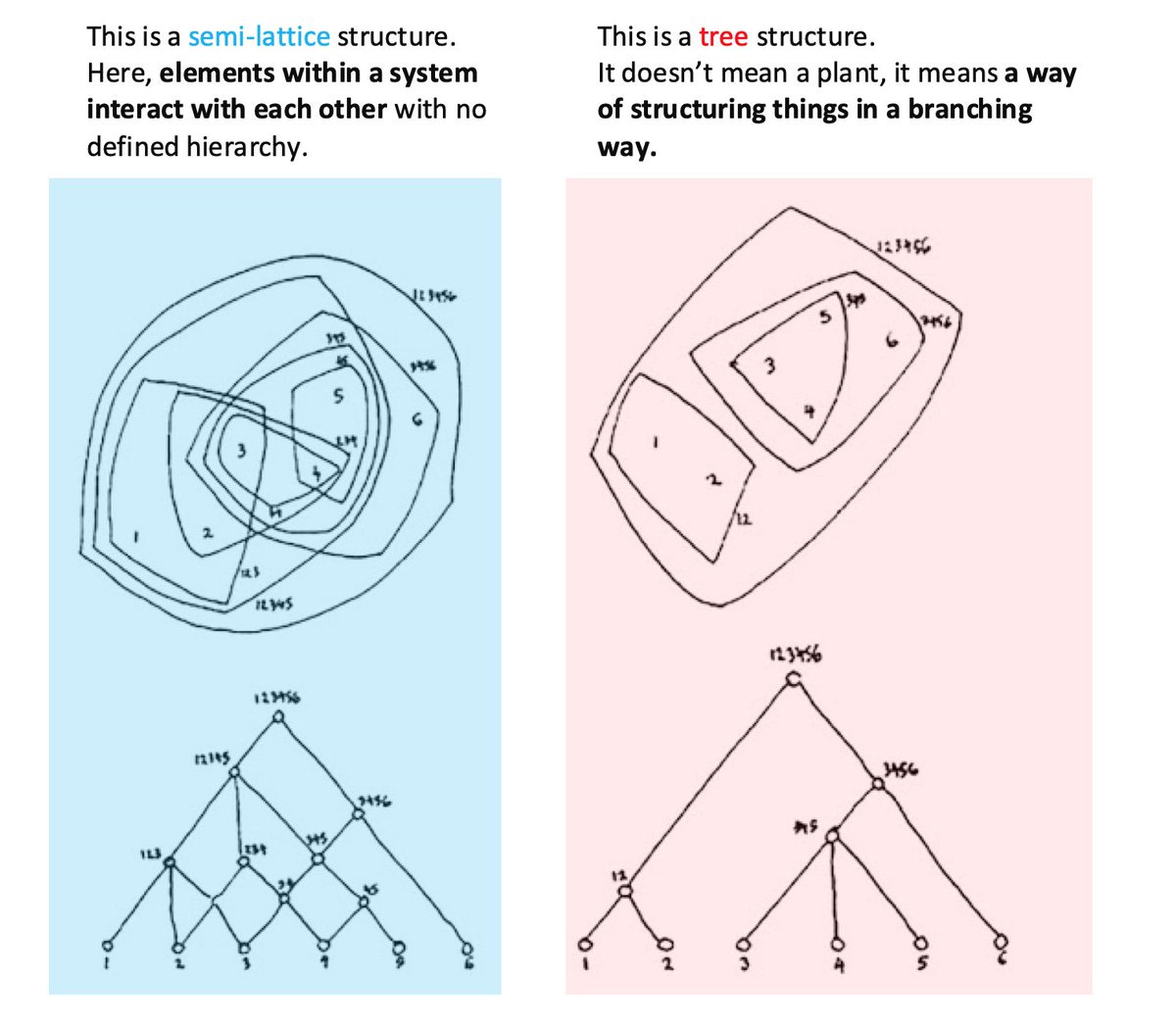
I’ve been rereading Christopher Alexander1 lately, and Rich’s description above pairs nicely with the ideas CA puts forth in A City Is Not A Tree (1965). My read is that interesting, complex, beautiful things emerge out of ecologies rather than hierarchies.2 Things have to be able to influence and be influenced by multiple things simultaneously in order to develop in non-stilted, non-flat ways. Reducing things into flat dull hierarchies creates flat dull people living flat dull lives. So one of the lessons here for me is to try to think about making ecologies out of my drafts and notes. One way to begin doing that is to simply share snippets more freely, which I’m trying to do.
Also, you can think of this “100 day project” that I’m undertaking now as a kind of container that’s challenging me to make tradeoffs… It’s slightly embarrassing to admit it, but it’s almost like I needed a “real deadline” in order to force me to make those tradeoffs.
the context is always collapsing
My favorite essay of all time remains The Information (2011), written by Adam Gopnik for The New Yorker. It’s an essay about the Internet that manages to elegantly describe the history of media technologies (such as the advent of the printing press, and television), and the prevailing reactions that people have each time (which today we might describe as ‘it’s so over’, ‘we’re so back’, and ‘it’s always like this’), and the merits of each perspective, and how they interact with each other. The point I want to cite from it this time is that people have always been complaining that technology is making our reality more fragmented, but that doesn’t mean they were wrong, and it’s entirely possible that we are in fact on a path where things might so bad that we lose the ability to do something about it.
I remember rewatching TED talks from the early 2010s about the future of the Internet, and it’s striking to me that none of the techno-optimists of the time seemed to think seriously about the possibilities of misinformation and abuse. We were just going to get more citizen journalism and flash mob dances, and the worst things that were going to happen were quirky pranks like sending Pitbull to Alaska or naming a boat Boaty McBoatface. Everyone was going to get along at last, and finally see each others’ points-of-view, and with more information about each other we will finally respect, appreciate and trust each other. And you know what, I really did believe that. And a part of me still kinda believes that.
But the context is always collapsing, the meta is always changing. Why is blogging dead? I like to remind people that we used to watch 3-minute-long lip sync videos. My personal favorite is a now 20-year-old(!) video of two Chinese guys lipsyncing to the entirety of Backstreet Boys’ I Want It That Way. Nobody has time for that kind of thing anymore. At the time I remember thinking naive optimistic thoughts like “wow, this sort of cultural exchange is a harbinger of a future era of shared understanding and harmony!”
Another video I remember being very moved by was Where the Hell is Matt? 2008, which had this guy Matt going around the world dancing with strangers. We don’t really live in that world anymore, I think in large part because YouTube is now a place where people make a living. I don’t know if I would be quick to say that this is better or worse. Maybe it’s both. It’s different. Nobody in Matt’s video was looking to get famous or make money, they were just having fun. And the tragedy is– if a kid today wanted to do what Matt did then, they wouldn’t quite get the opportunity to, because people will now often assume that the kid is doing it to grow their channel. Which isn’t necessarily a bad thing! But it’s different.
The context has changed. You can still be earnest online, but your earnestness will not be received the same way it was before. The challenge is to be earnest anyway.
unfolding the whole
While putting this together I found myself thinking about the first page of Moore & Gillette’s King, Warrior, Magician, Lover (1990) – “he just can’t get himself together.” He is fragmented.
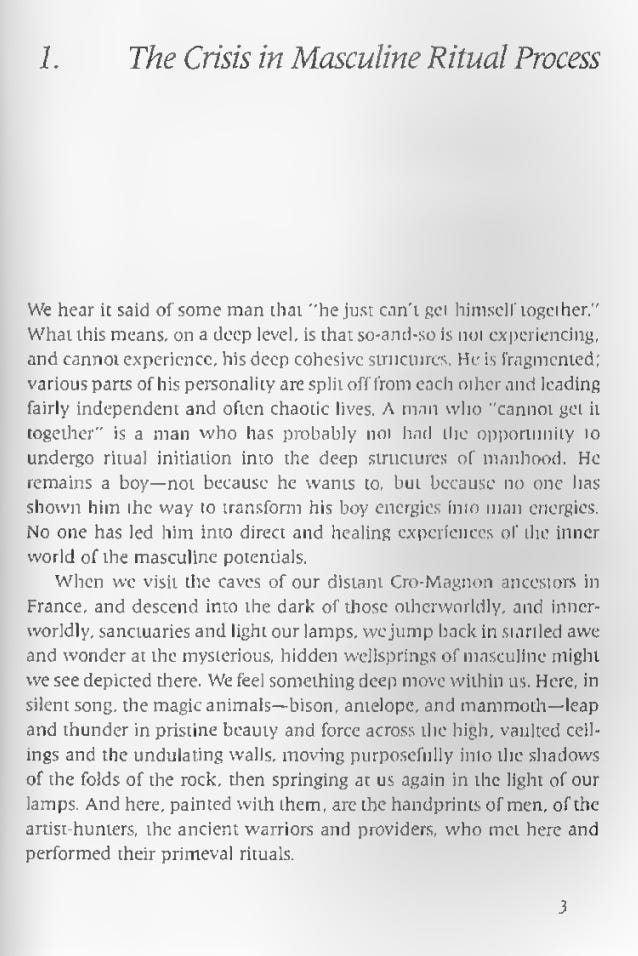
This rhymes with Christopher Alexander’s description of bad spaces as being are full of internal contradictions, lacking good differentiation, having no sense of wholeness. He wrote, I paraphrase, “Every individual act of building is a process in which space gets differentiated. It is not a process of addition, in which preformed parts are combined to create a whole, but a process of unfolding, like the evolution of an embryo, in which the whole precedes the parts, and actually gives birth to them, by splitting.” Here I’ll point you to Henrik Karlsson’s post about unfolding, Everything that turned out well in my life followed the same design process (2024). It resonates with my own experience, and if you’re not familiar with unfolding as a concept, it should give you a sense.
For a while I think I was a bit confused about the relationship between fragmentation and differentiation. They are similar-seeming words that are used in different contexts which have different connotations. You could say in a strictly technical sense that the words are almost synonyms. But I’m starting to see that what is meant by differentiation here is a kind of “good” fragmentation across space and time, in a way that allows the person to remain whole. We have different rooms for eating and pooping, for good reason. Having the right places and times for things is what allows us to move through the world without being constantly anxious about how we ought to be doing something else somewhere else at any given moment. We inhale and exhale, sleep and wake, work and rest as required. To do this without freaking out, we have to be able to trust. Trust ourselves, trust our environments, trust that schedules and plans will be followed through on. I have always struggled to trust myself.
but he trusts me
Raising my son (currently almost 2.5yo) has been a “we’ll do it live!” education in being a nourishing, reassuring, constant presence in someone’s life. I’ve had some practice being encouraging to people in bits and pieces, but the challenge of parenting is that it doesn’t stop. You can’t take a sick day and say I don’t feel like being a parent today. Some of my proudest moments are hearing my son say things like “Daddy will help me” or “Daddy will protect me”, and in those moments I also realize that I never really felt that way myself about my own parents. He trusts me.
Which reminds me of a great exchange in Gabor Mate’s conversation with Hasan Minhaj– the whole interview was great but this is at about 30 minutes:
GM: When you were bullied, who did you talk to about it?
HM: Nobody.
GM: That’s where your trauma was. If your kids were bullied, who would you want them to talk to?
HM: Hopefully me.
GM: If your kids were bullied, and they suffered humiliation, shame, pain, fear, and they did not talk to you about it, how would you explain why your kids are not talking to you?
HM: Oh I couldn’t explain. I’d be very hurt. I’d be sad that they didn’t tell me.
GM: Yes, but I’m not asking how you’d feel. I’m asking you how would you explain why they’re not talking to you.
HM: Probably because on some level I have not created a channel for them to talk to me…
GM: They don’t feel safe with you.
HM: Yeah.
GM: They don’t trust you. What’s it like for a kid not to feel safe and trust with the parents?
HM: It’s terrifying.
GM: That was your childhood.
HM: [pause] … You know my parents listen to this podcast…
GM: Your parents did their best. I did my best with my kids.
Yeah. So. Ideally, parents create a context for their kids where their kids can feel safe, loved, supported, heard, attended to. And since we don’t live in an ideal world, hopefully we at least each try to do better for our kids than our parents did for us.
“this is not a place of rest”
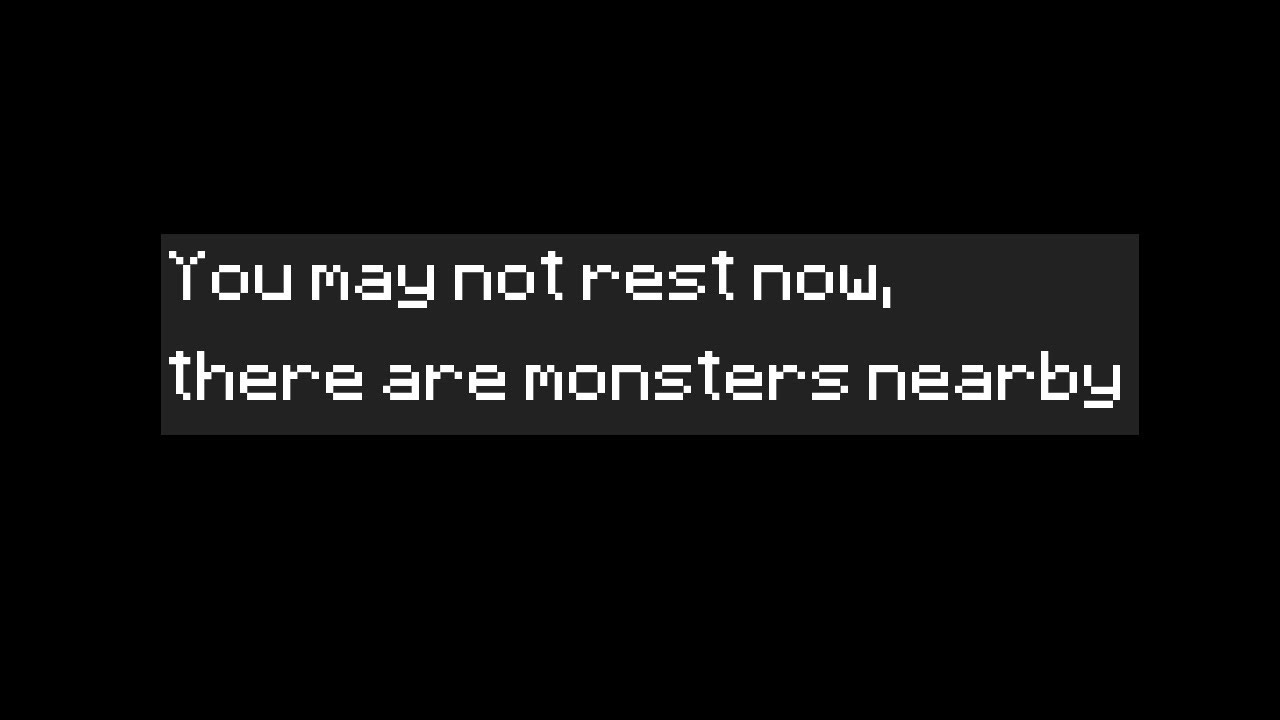
There are some things you learn in a healthy home environment that are hard to learn outside of it. One simple thing that’s resonating with me right now is that home should be a place where you can truly rest. As another friend Wendell once tweeted,

I never really felt like I could rest at my parent’s place growing up, except after everyone else had gone to sleep, or on the rare occasion that I was alone at home. When I moved out to a place of my own at 22, I had the opportunity to create a true home for myself, at least theoretically. But I never fully managed to feel at home there, either. I would half-jokingly describe it to my friends as a “halfway house”– I had moved halfway across the country to an unpleasant neighborhood, and never fully settled in. For twelve years. The story I told myself was that we never quite had the money to renovate the place to make it homey, but that’s not quite the truth– the truth I never admitted to myself was that I didn’t want to renovate, because I didn’t even want to live there in the first place. We would go to interior designers’ offices, sit through their presentations, tell them what we thought we’d like, and then end up ‘mysteriously’ not following up. But it all makes sense in hindsight: I didn’t want to spend tens of thousands of dollars beautifying a place that I didn’t want to stay in.
I did make some tiny attempts to try and make things better. I made myself a little bar, bright red, along with with somewhat fancy bar stools that my cats proceeded to gleefully rip up. I taped up ads from magazines on the walls, like a teenager. I had a squat rack installed so I could lift weights at home, which was initially great but the carpets got grimy in a way that we couldn’t figure out how to clean. And… that was about it. We never painted the walls, which was a mistake. We kept putting it off, deferring to the fantasy that we might renovate soon. Once again, there as I did at my parent’s place, I mainly made a home for myself on the internet, disassociating from my physical reality.
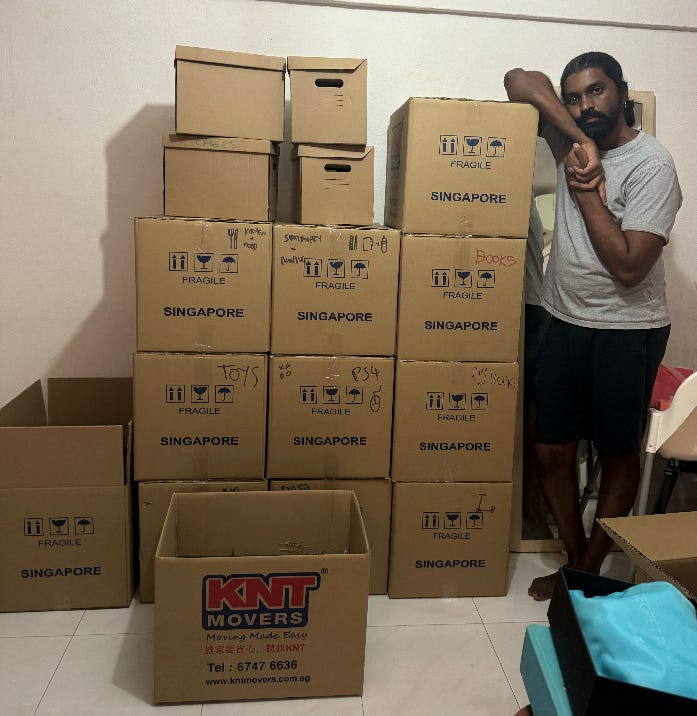
I had my wife take this picture of me with our boxes of stuff when we were moving out of our first place. You can see how sad and tired I look. I couldn’t bring myself to smile. I was relieved to put this entire chapter of our lives behind us, but also ashamed and full of regret about all the bad decisions I made, and all the good decisions I didn’t make.
I can say that I am much happier in our new home, which is in a much better neighborhood, and currently free from junk. (Mostly.) We had the walls painted. We installed better cabinets– they have LED lights that come on when you open them, which makes them a joy to open in the dark. But I know deep down that I haven’t addressed the core issues within myself that caused so many of my problems. I can’t say that my current home is especially conducive to rest. It still feels sparse and unfinished, like we haven’t fully moved in yet. And I’m so worried that it’s going to remain that way indefinitely. So I’m going to have to figure something out.
the apartment full of keyboards
I had a dream once that I was in the cramped apartment of a frazzled musician who was surrounded by keyboards. I remember they were trying to be cheerful, but underneath that it was clear that they were overwhelmed. I felt so sorry for them. And I knew immediately that the musician was me. I had chatGPT generate me an image that feels roughly resonant:
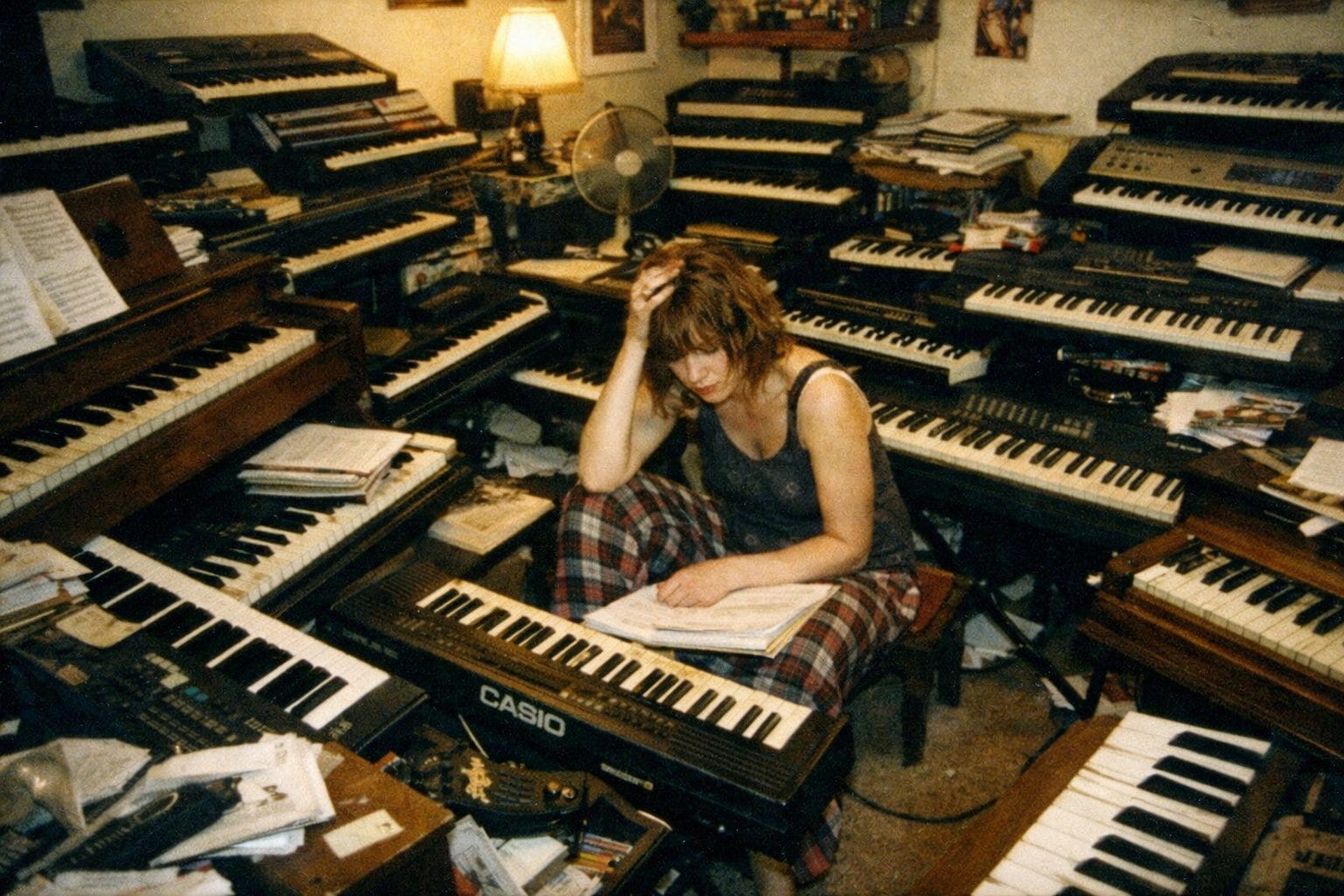
I recognize myself in this picture. It can be hard to see a painful reality from the inside, but sometimes it becomes clearer once you externalize it. And this gets a little recursive, because what I’m seeing is a person with an internal problem looking for external solutions. If a musician with one or two keyboards says that they haven’t quite found the right tool to help them make the right sound, I’m inclined to believe them. If a musician with 50 keyboards says this, I get suspicious. It starts to seem like maybe they’re barking up the wrong tree.
Here my wife might add, “maybe they don’t even actually want to solve the problem, maybe they just like collecting keyboards and don’t want to admit it to themselve I have to consider that she might be right. I think there’s a sense in which it’s sort of true, but that truth is contextual, and the context is painfully small. The person likes collecting keyboards within the context of “this is going to help me”. But as the keyboards pile up, it becomes clear that it’s not actually helping. This is an uncomfortable feeling. But you know what relieves discomfort? The excitement of trying and buying a new keyboard!
I think it would be helpful for me to continue thinking about this musician. What does she really need? What does she really want? What she really wants is to make music. But what does that mean? What’s stopping her? I find myself grasping internally for some wisdom that would help, and I quickly arrive at Kenny Werner, a jazz pianist and educator that I’ve admired. What would Kenny Werner say? More gear increases the psychological noise around the practice- adding more things to learn, more decisions to make, more ways to be disappointed before you’ve even started. All that gear accumulation is displacement activity, using acquisition as a substitute for presence.
A while ago when I was doing a marketing consult, I found myself laughing while recommending a solution to the mess my client had on one of his sites: “Pick three!” I laughed because I saw immediately that I had the exact same problem, and needed to hear the exact same solution. I would recommend this to the musician, too. Pick three keyboards, and put everything else in storage for a month. Spend the month making as much music as you can, being as present as you can. At the end of the month, you’ll likely feel much more comfortable about getting rid of the other keyboards. If you still can’t do it, maybe pick three more to keep in storage and get rid of the rest. Or acknowledge openly that the other keyboards are playing an emotional support role, and pay the storage fee while admitting the truth about that.
building the inner sanctum
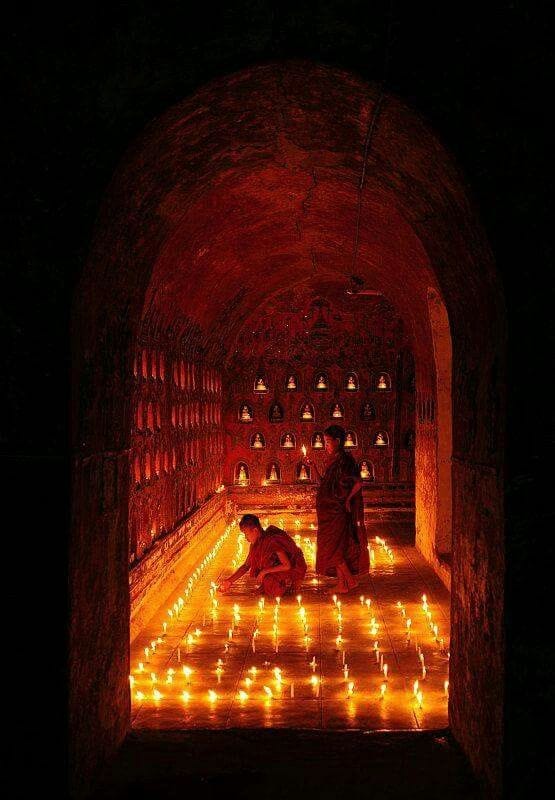
An idea I’ve been circling around in a few of my posts– particularly a matryokshka of possibilities and straight outta tartarus – is the idea of inner sanctums. The dream-within-the-dream. What is a sanctum? Merriam-Webster says “a sacred or holy place, or a private retreat where one is free from intrusion.” It’s a differentiated, rarified, protected space. It’s a place where you get to experience a peace that you don’t typically have in ordinary life.
The first time I remember really thinking about sanctums was on a visit to India with my parents in 2018. This wasn’t my first time in India, or my first time in a Hindu temple, but I’m not sure I can point at any earlier writing on the subject.3


I’m tempted to say that I got interested in sanctums be because I had spent half a year writing lots of tweets at this point, with lots of quote-tweets, and quote-tweets kinda have a sanctum structure to them. I have a lot of gratitude for the quote-tweet feature. I wouldn’t have been able to do my elaborate hyperweave of threads without it. And I think it’s definitely shaped my thinking. While it’s vaguely obvious that anybody can comment on anything at any time, the quote-tweet really gave me a vehicle for practicing it. I learned to see tweets as setups for future quote-tweets. You can build a sanctum around anything at any time. Anything can be a talisman that you imbue with meaning. And you can construct a shrine or an altar at any time to consecrate a talisman. You mainly have to have the intention of doing it, and then you have to tend to it.
The question I have for myself is, why have I not taken the time and trouble to create protected spaces in my own life, where I can feel rested, contemplative, relaxed? I’ve even gotten pretty good at providing it for others. And yeah I can broadly say something like “oh it’s trauma lol” but that’s not really an explanation, that’s just naming the thing. Let me try and describe it all one last time.
For me to rest, I have to trust that everything is going to be okay. And I think it would be accurate to diagnose the whole thing as a problem of self-trust. I know intellectually that it’s counter-productive to withhold rest in exchange for productivity, but emotionally I guess I’ve been anxious that I’d perform even worse otherwise. This is very bad management– I am being a shitty boss/manager/custodian of myself, in a way that I would never treat my children. And probably the only way out here is to forgive myself, and then to expand my awareness of time, and then to methodically rebuild my trust in myself one day at a time. That’s what I would do for them. That’s the example I’d like to set for them. Let’s see if I can do it.4
btw one of CA’s core ideas was that there used to be an intuitive, ‘timeless’ way of building that has been lost, seemingly because of the imposition of instructions… “we have so beset ourselves with rules and concepts and ideas of ‘what must be done’”… this is a recurring theme across a lot of things I want to talk about, and will likely feature often in my next 99 posts.
This also matches the problem described by James C. Scott in Seeing Like A State (1998), which was nicely overviewed by Venkatesh Rao in A Big Little Idea Called Legibility (2010).
The innermost sanctum of a Hindu temple is called ‘garbhagriha’ (in Sanskrit) or ‘karuvarai’ (in Tamil), both phrases literally meaning “womb chamber”. I just felt I ought to say that somewhere.
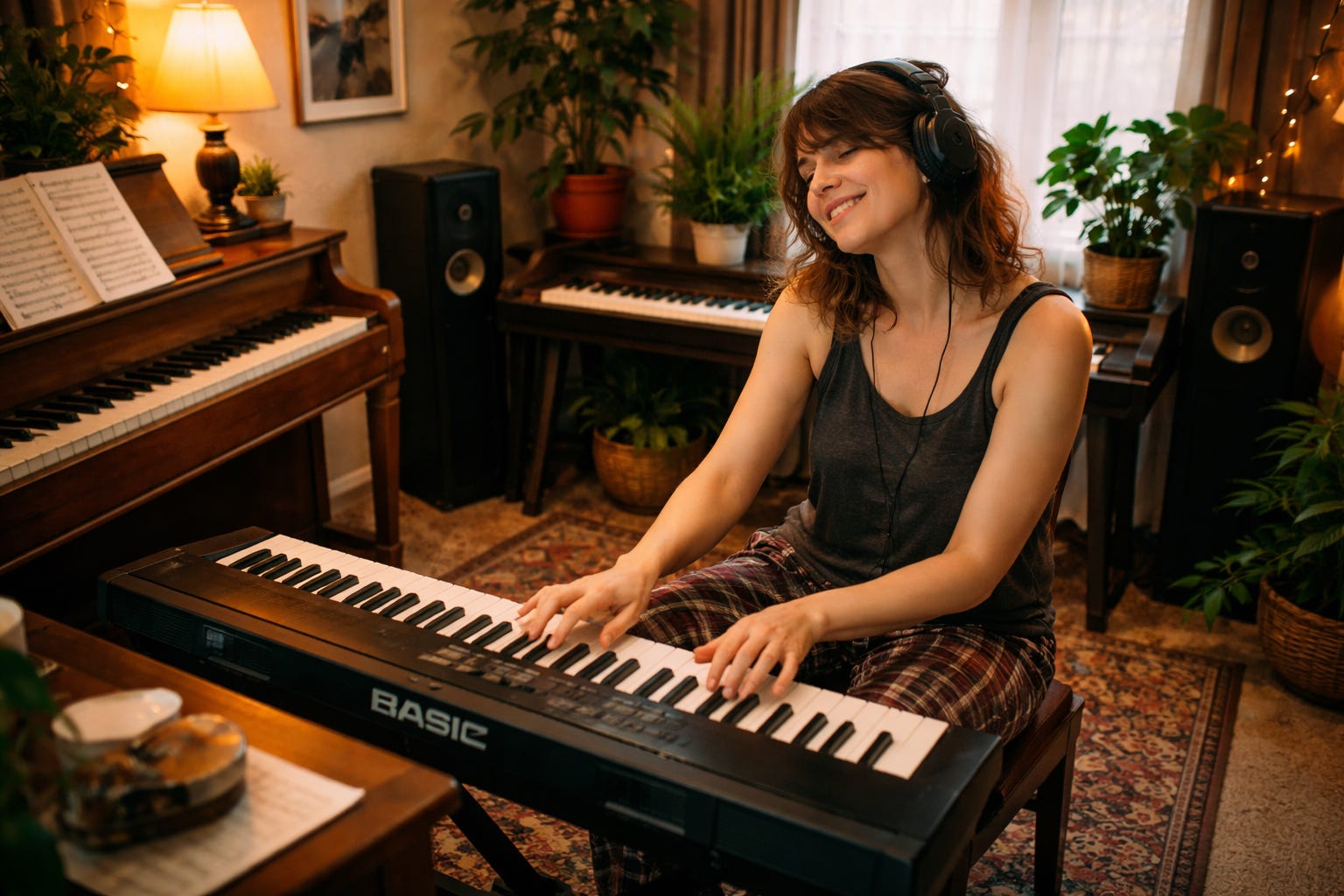
I first had the dream of the musician’s apartment in 2022, and I generated the first image months ago. But only when writing this did it occur to me that I ought to generate a happy ending for her. I want her to be happy, and she’s just someone my brain made up one day. And dare I say, I want me to be happy too.