surf's up!
let's get to winning

I was doing a review of some of the many, many unfinished drafts I have lying around, and it struck me that a lot of them have a ‘grandiose shape’ to them, by which I mean they’re conceptualized from the beginning in ways that require a lot of time and energy to finish, and would also require quite a lot from my readers. That whole class of operation now seems misconstrued to me. I was trying to do too much. I ought to be doing less. So, okay. What is something small I could do right now that would be worthwhile?
I glance around. I have a bunch of open tabs. There’s a gif in another window of a guy surfing. It’s made by PERFECTL00P, who is a gif creator I recently discovered and really vibe with. At my best, when I’m in a state of flow, I feel like this guy. And I haven’t truly felt like this guy for years now.
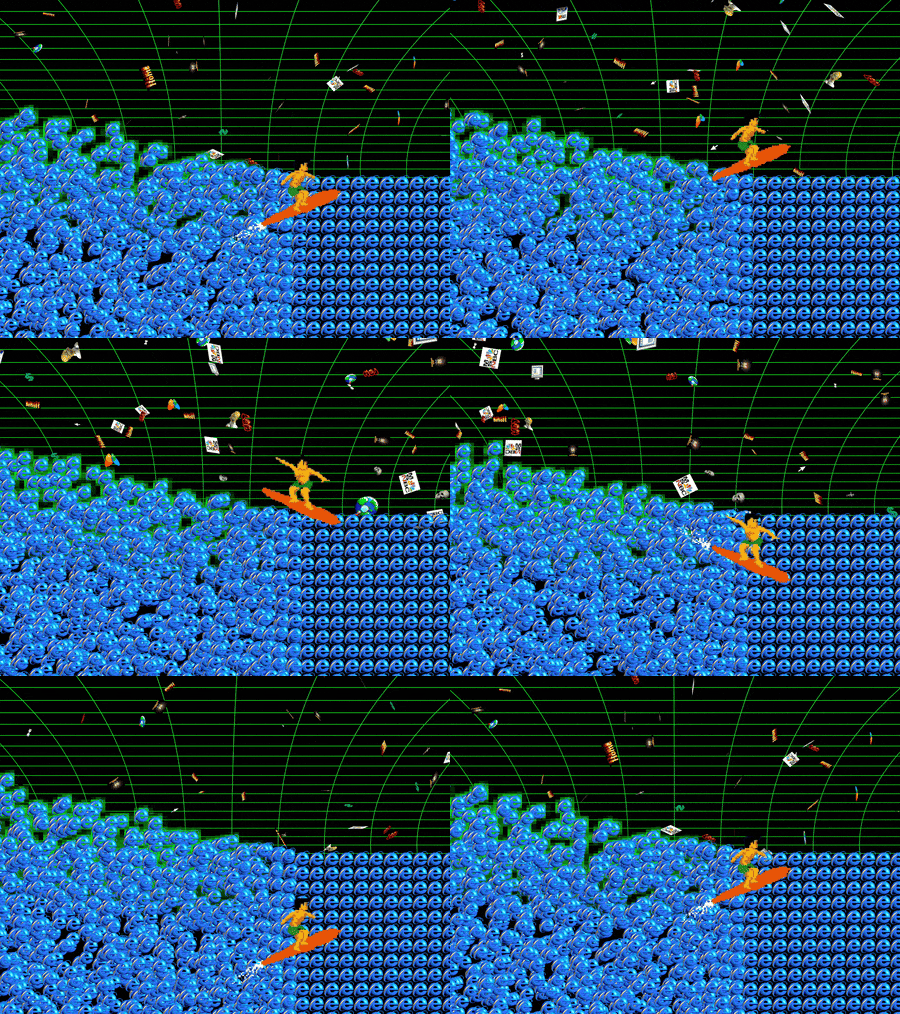
What would it take for me to get back into this state? I would have to pick something and flow with it to the next step. Here I often think “I should close all my excess tabs”, but if I step back for a moment and think about it, that’s an approach that has rarely really paid off for me. And it’s a pattern of behavior that I’ve had since I was a child, actually. I always tried to “see the bigger picture”, to try and “tidy the whole terrain”, which is always an exercise in futility. I wrote a thread about this, which I’d title “win_loops”. I’ll try and quickly summarize that thread here:
When I was a kid there were some video games that I liked playing, even though I didn't really understand the mechanics of the games. One was playing GTA2 not knowing anything about the missions – I’d just run around doing random acts of nonsense, which was fun, but eventually got boring. Another was how I played SimCity 3000. I’d open the map creator, manually flatten out the entire map, then I’d spend all of my money building roads that outlined the outermost square of the map. I’d spend so much $ building these roads that i’d get fired as mayor because the maintenance cost would bankrupt the non-existent city.
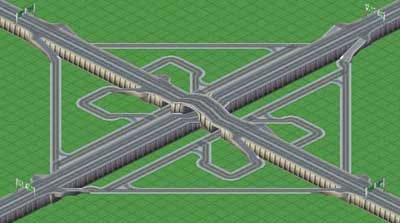
I repeated this cycle endlessly. I suppose you could say maybe it wasn’t a failure in the sense that I really liked building roads. That feels like cope, though. I just didn’t know how to play the game. I would have enjoyed building roads more in the context of a functional city. (Having subsequently learned to play, I can confirm that this is correct.)
What you’re actually supposed to do is to lay out a bunch of zones: residential, commercial, industrial. You connect these with roads. Also build a power plant, and power lines. Then Sims (simulated citizens) show up and build buildings and pay taxes. And now you can afford to build and maintain more roads.
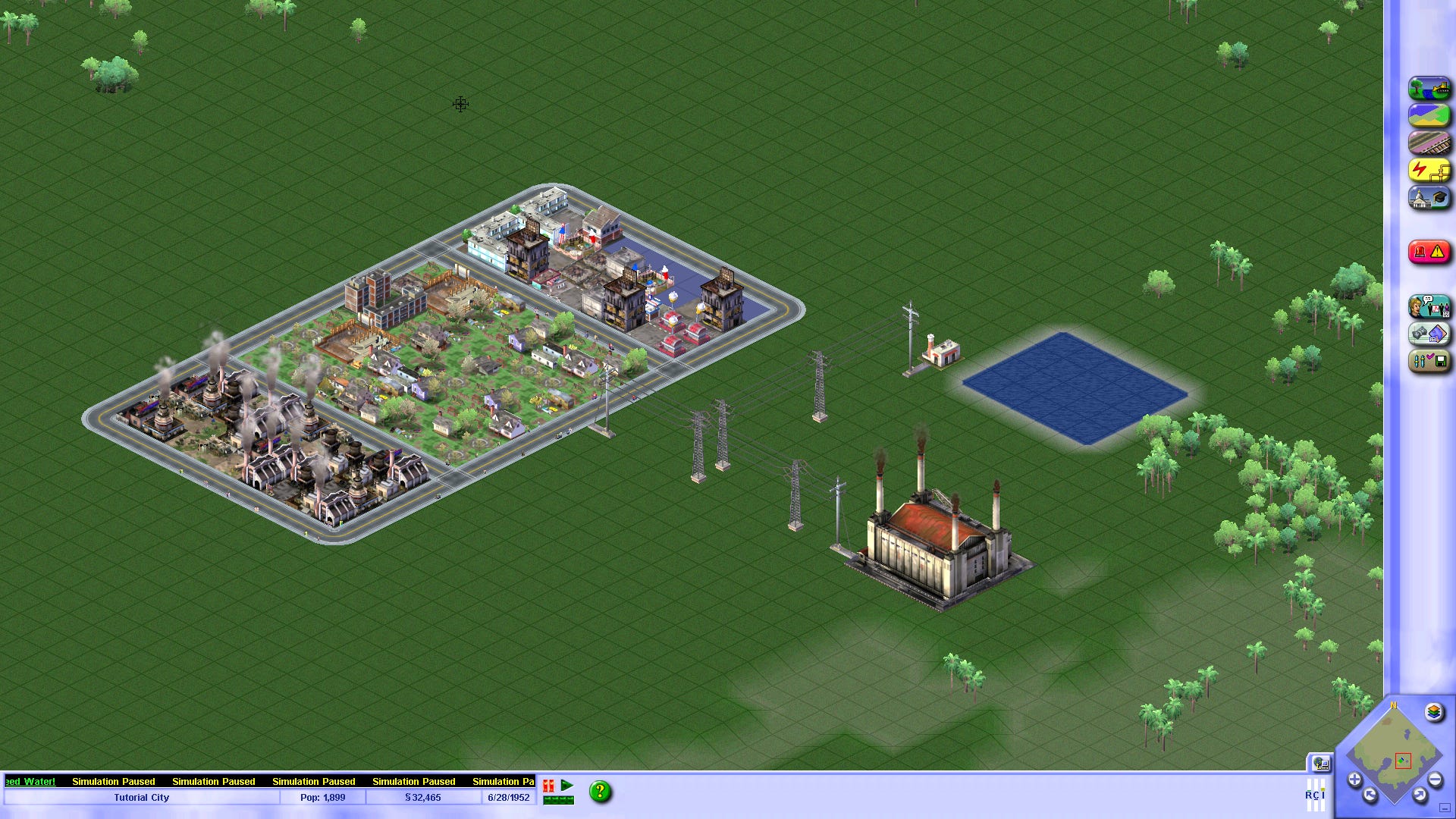
What i just described is an example of the core win_loop in Simcity 3000: you need Sims and to make them happy → they pay taxes → you get money → you can do more things → get more Sims who pay more taxes → you can care about things like education and healthcare and tech, or whatever you like really.
Let’s recap. So I used to misallocate my resources as a kid, and I continue to misallocate my resources as an adult. Now, I’m also well aware of errors like “man thinks his life is a resource allocation problem to be solved”. As a Singaporean, I was born and raised in a cultural environment where people are used to thinking of themselves as economic digits to be valued according to their productivity. I use to chafe at this. (I still do, but I used to, too.) A lot of my passionate teenage rage was against that sort of soulless utilitarianism. But. That doesn’t mean that you can run away from the problem of resource allocation entirely. We do have limited resources. Those resources can be allocated well or poorly. We can grade ourselves on how well we are allocating our resources. I’d give myself maybe a lifetime C+ or B- on average. I have occasionally made some A++ decisions that have paid off handsomely in ways that allow me to slack off elsewhere.
But even as I type this, I find myself flinching and cringing, because this A-B-C model of grading is too reductive to capture the nuances of the reality of a person’s life. The truth is somehow both simpler and more complicated. I can directly see, feel and know the consequences of my decisions, and the consequences of my indecision, and I am very far from the “production possibility frontier”.
Here I feel a sense of deja-vu, and yeah turns out I wrote about the frontier a few posts ago, in the min-max mystery: “The most important thing for me right now is to take care of my family, which means both providing for them and being present for them. A past version of myself saw these two things as being in competition with each other– that time spent being present is time not spent providing, and vice versa. And that’s sort of true in a limited sense, but… there’s a lot more going on. It’s unlikely that I’m anywhere close to efficient, and I also do believe that the possibility frontier can be extended.”
When I wrote the min-max mystery, I think I felt it was important for me to focus slightly more on presence. Being attuned to my feelings and to my family. Having written that, I now feel like my current focus is slightly more on provision. Which means thinking about logistics, thinking about project management. What do I have to say about those things in the current context of my life? Well… I’ve been thinking again that ought to do smaller things. More precise, specific, little things. And as I say that out loud I’m experiencing deja-vu again. I’ve definitely said this a bunch. I know I have a substack post where I concluded something like, “Instead of trying to do 20 polished essays I should do 100 scrappy drafts”… and previous posts like scaffolding and fragments are about this. Okay. It’s actually dawning on me that I keep thinking I haven’t written any of these things down, and maybe some of the work for me right now is to just revisit, reconnect and recontextualize what I’ve already written. A lot of it was written in desperate tiredness while the baby was sleeping. Soon there will be another baby. I find myself stuck in a kind of Memento-esque situation, with me trying to navigate my life and my body of work via little scraps and notes that I’ve left myself.
Ultimately the question in both my my heart and mind is, how do I win? How do I pursue winsome outcomes for myself, for my family? How do I feel like I’m making good use of my time? I glance over at another open tab– it’s my google Keep, where I keep a bunch of visuals and titles, and “WORK BACKWARDS” leaps out at me.
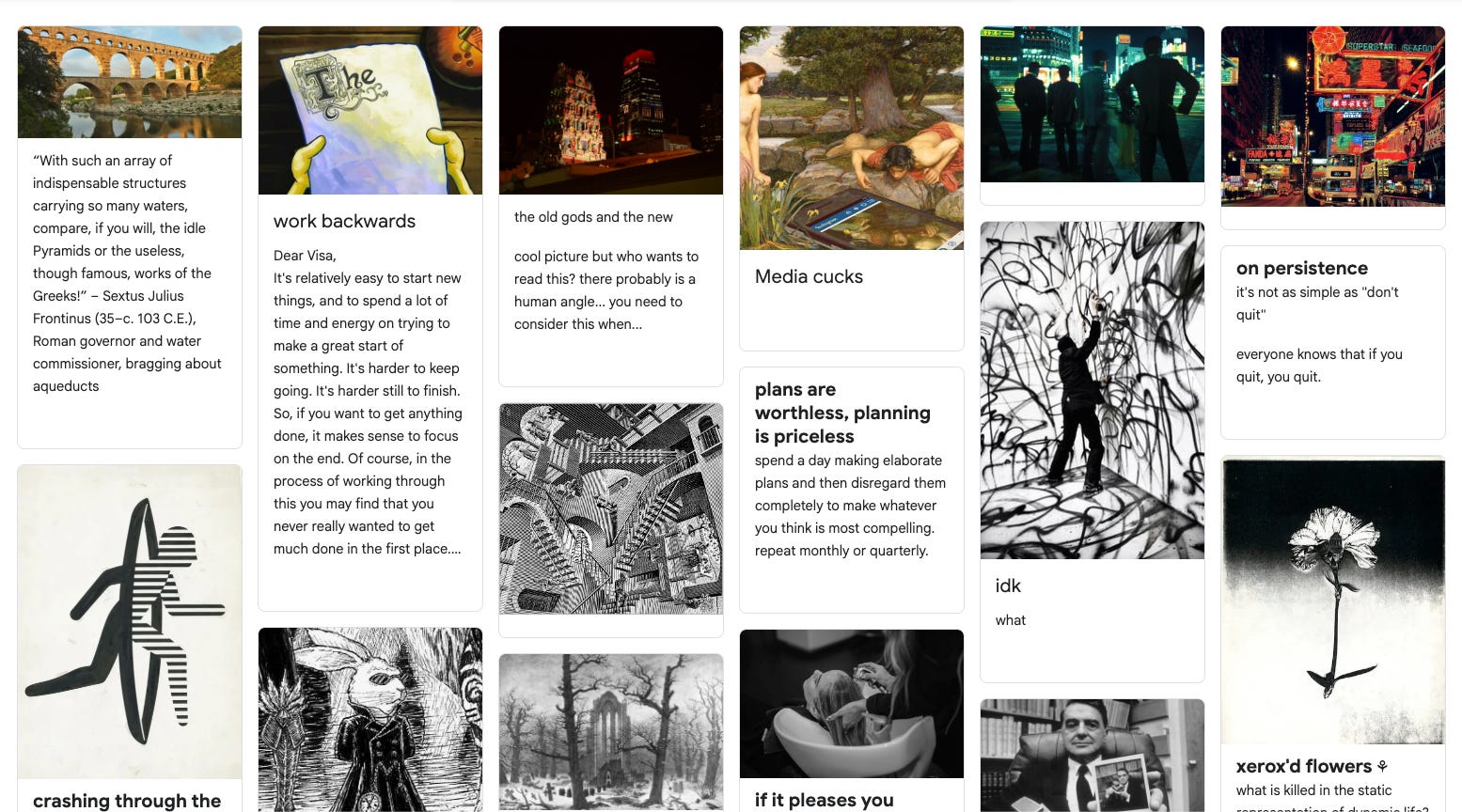
And a bunch of other sentences begin to assemble for me. To work backwards, you have to have an end in mind. To win a game, you have to know the rules of the game. You have to know the victory conditions. Are you playing a finite or infinite game? Or perhaps an infinite game composed of finite subgames? Alright. Winning the infinite game is about continuing to play. About looking forward to the next game.
And as I learned from my SimCity experience, I’m likelier to look forward to the next game if I know that I actually contended with the win_loops properly. In the context of writing Substack posts, I realize, I was fixating too hard on trying to “win grand essays”, and then blundering and failing. I really ought to just find ways to win the enjoyment of sentences and paragraphs. That’s what got me in the game in the first place, wasn’t it? A good sentence can still be a thrill to write. A good paragraph can still dislodge a jammed spirit. If I can just flow with that, if I can just surf those waves more often, I think everything would sort itself out.
PS: I do believe this is what enlightenment looks and feels like:

i used to love your writing, visa
i still do, but i used to, too 😋
LFG BRUH 🤙