

one more turn...
What is it about some uses of time that feel so compelling? What makes a gaming session feel well-spent vs not?

to manage expectations: this post is pretty much a meandering unedited ramble. it’s more for me than for you. i think this disclaimer might apply to like the next dozen or so posts I will be getting out of my system before we really get down to business
what determines if a game session is well spent? — stay in the ‘gradient’ — define the problem — empty your cup and contend with unconceptualized reality — rugpulls necessary?
i.
I’ve been playing quite a lot of chess lately. I’m still not very good at it, but a friend asked me if I’d play with them, and so I downloaded the chess dot com app on my phone, and it turns out that playing 5 or 10 minute games are a really fun way to spend some time. It’s particularly satisfying, I think, to have an ELO score that goes up or down depending on whether you win or lose, and to feel a sense of progression. You can get as into it as you’d like, looking up tutorials and studying openings and so on. It’s also been satisfying to learn to spot patterns. I especially enjoy punishing the kind of player that tries to score an easy win with a scholar’s mate or an otherwise insultingly aggressive early game. I used to think I wouldn’t be interested in chess because it’s such a solved game in the global sense, and it requires such a massive time/effort investment to get really good, but I’ve found that I can be nerdsniped into it if my friends want to play. Which I think is a valuable thing to know about myself. I like having fun with my friends. This is something that I knew very well in my teens, but I kinda spent almost decade in denial of it while I tried to coerce myself into a grindset attitude, which I might get into elsewhere.
Thinking about this got me to try playing Sudoku again just to contrast the experience, and turns out I really enjoy that too, at least at a manageable difficulty. (I was emboldened by a couple of quick wins to try out Extreme, the hardest available difficulty, and ended up staring at the board in confusion for an hour. Which… I don’t regret doing, but I know now that it would be wiser for me to go up one difficulty level every few puzzles. Since writing this I’ve played a few more rounds and enjoyed every one, about 5-10 minutes a pop, and worked my way up from Easy to Medium to Hard to Expert, the last of which took me 27 minutes that feel well-spent. Which makes me ask, what determines if a game session felt well-spent? The first hour of struggling with Extreme felt not-unreasonable, but a second hour of doing the same would’ve felt wasteful to me, because I already learned from the first hour that I was in over my head. Of course, I could be wrong, but this is where things like intuition come into play. I could just tell from the complexity of Extreme that I wasn’t going to get it.
I’m slightly surprised to find that I feel good just thinking through this stuff. It makes me feel like I can trust myself to manage my experience, which is not always something I feel confident about. Even now as I write this– how do I know that I won’t just alt-tab to twitter and then end up getting tired and sleepy and leaving this post unsatisfyingly unfinished? It’s tricky stuff. I have some beliefs that I’m looking to test here. One is straightforwardly ‘focus on what you want to see more of’– the idea being that if I return to the idea that it will feel good to finish this, then I’m likelier to finish this. I think that’s true. But it doesn’t always feel like it’s enough. I think there’s at least one other component to it, and I think it’s a design problem. And if I can figure out how to describe that design problem, I think that would be really satisfying.
ii.
Before I get into thinking through the design of my writing habits and routines, I want to talk about past gaming experiences.
When I was a teenager I spent many pleasant hours at LAN shops (aka cybercafes) with friends. We’d always spend at least 2 hours gaming, and sometimes it went on for 3, 4, 5 hours. I think our most legendary session might’ve been an all-nighter until sunrise, fueled by cup noodles. But usually it was maybe 3 hours, which I now realize is also funnily-and-interestingly the length of the longest written examinations we used to have in Junior College. Maybe that’s about the reasonable limit of people’s focused attention before it starts decaying? Anyway– I much preferred LAN with the boys.
But let me say more about the specifics, because I feel like there’s something useful and interesting to be discerned to about how this works. Sometimes we’d casually play Counter-Strike, which was fun, but my most satisfying memories are of two games in particular: Playing DOTA against bots, and Left 4 Dead. In both cases we worked our way up to playing at the highest difficulty. Each “run”, if successful, would last maybe 40 minutes, after which we’d typically step outside to smoke cigarettes and review how the last run went, what went well, and what we ought to do differently. I’m remembering now there was at least one evening where we must’ve lost to the bots maybe 4 times in a row before finally winning, which was an exhilarating triumph. I think there were some days where we could feel that our chemistry wasn’t working out, we were having an off day– and so we’d switch games or drop the difficulty.
I’m experiencing a mild awe at reflecting on how the gamer behavior patterns emerged. We probably originally just wanted to spend a couple of hours goofing off, trying out random games, and then eventually we converged on something that was immensely satisfying, that fit perfectly within the constraints of time, energy, money, skill. Every L4D completion at the hardest difficulty felt like a cause for celebration. I really mean it when I say that some of those moments were the highlights of my teenage life, to feel like I was part of a team that was collaborating skilfully to achieve a shared objective that none of us could have achieved on our own. And we did all of this without any grand design, but really just by trying to have fun, and trying to take that fun seriously.
So okay, that’s… a particular pattern of multiplayer games that me and a few friends played. It was far from the only pattern in town. I had at least one friend who played World of Warcraft, which has much bigger ‘loops’, and was famous for sucking players in to the point where their everyday life would suffer. Amongst non-gamers it might have all seemed like the same thing, but amongst gamers I think we had a consensus that a WoW addiction was more ‘dangerous’ than a DOTA addiction, because it would be more all-consuming. I loved hearing my friend share his stories of WoW raids and so on, but I’m also grateful that my computer and internet were too shitty for me to get invested in it myself. The great thing about DOTA and L4D is a single main loop ends in under an hour, and there isn’t really any larger loop to be consumed by.1 Earlier I mentioned Counter-Strike— my friends and I mostly played it casually, but we were aware of people who played it at a higher level more competitively, and that involves its own larger ‘loops’ that we didn’t even fully understand, and so couldn’t really get sucked into.
What I’m getting a sense of here is that these larger ‘loops’ have gradients, and if you want to get sucked into them you have to stay on the upward gradient long enough to complete the loop. Here I’m reminded of lessons from my other life in marketing, where I would study things like user experience design, and read about things like user delight. I mean, think about any time you’ve said to someone, “you should watch this tv show, but be sure to stick with it until episode 3, because that’s when you’ll get hooked” – that’s sort of a form of what I’m talking about.
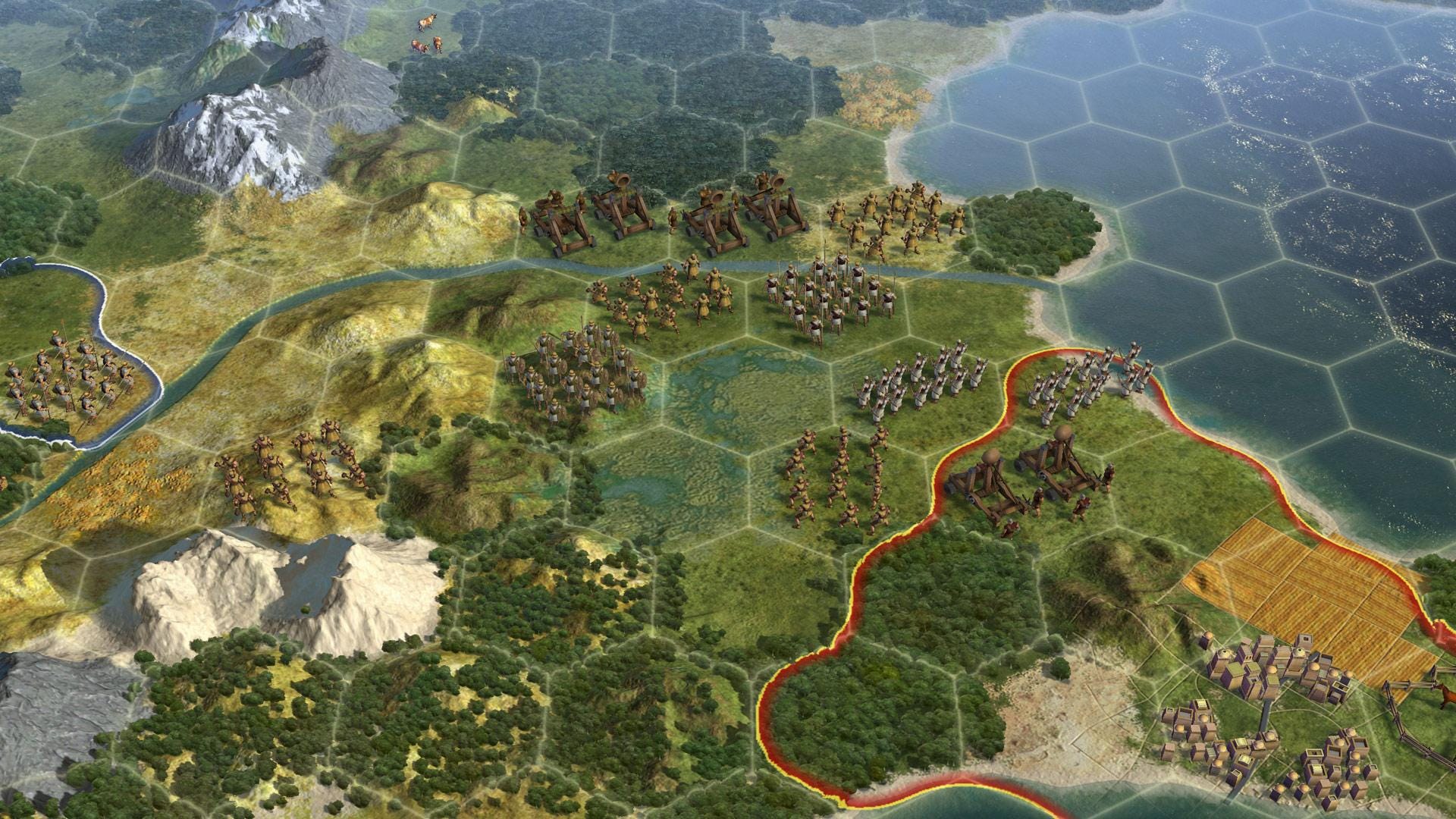
I’d love to talk about a bunch of single player games I’ve enjoyed, but I feel like I don’t have time and space right now. Leave a comment if you’re interested and maybe I’ll write another post entirely just talking through those stories. Super-quickly I’d want to talk about Simcity 2000 and 3000, Red Alert, Diablo 2, Borderlands 2, X-COM and Civilization V.
iii.
Alright let’s get to the main thing: writing. I’ll start in the middle. From 2013-2015 or so, when I used to have a long bus-and-train commute to work, I designed for myself an excellent daily routine of writing stream-of-consciousness essays on my phone. I called them “word vomits”. I’ve written hundreds of them, and I consider them a vital, load-bearing source of my writing ability. If I was really intense about it, I could do a thousand words in about 15-20 minutes. Usually though, I’d take my time and write leisurely throughout the whole commute, maybe switching tabs to look at what’s on Twitter, check in on my groupchats and so on. Sometimes I would write a few hundred words and then ‘abandon’ them because they didn’t meet my 1000 word criteria, or sometimes I just didn’t publish something because it didn’t feel right to me.
Around 2017 or so, my Twitter started heating up in a good way. I began to ‘find my people’, I started to enjoy the back-and-forth exchanges I was growing into, and so I started tweeting more and writing wordvomits and blogposts less. Twitter slowly grew to become my dominant interest outside of work, and I would spend hours tweeting every day. Once I left my job in mid-2018, it became the dominant interest of my life. And in hindsight, this was an excellent use of my time. (I did feel and believe it as it was happening, but it’s become especially obvious in hindsight.) Tweeting would lead to some of the best opportunities of my life, including being flown out first to San Francisco by my Twitter friends– an experience that would inspire me to write my first book, Friendly Ambitious Nerd. Twitter really changed my life and I will always be grateful for it. But 260,000+ tweets later, I’ve also grown a little weary of it, because I’ve come to feel that there are thoughts and ideas that are borderline impossible to express fruitfully in that medium. Tweeting exclusively feels like going to the gym and only working out part of the body. I start to feel imbalanced over time. Part of why I’m trying to write essays– even as some friends kindly and helpfully suggest to me that maybe essays aren’t my medium– is that I can feel in my bones that there are things I have to say that I can only say in longform. And my current level of competence might mean that I have to struggle and fail at it for years before it clicks. If that’s the case then so be it!!
Tweeting wasn’t the first time I’d been consumed by a particular form of posting– I’d previously had phases of posting on Reddit, on Tumblr, on Quora when it was good, on local Facebook, blogging about local politics and news before that, and hanging out on all sorts of random forums in the early y2k years. Sometimes I encounter people who ask about whether they should post on twitter, or how to have a good time on Twitter, and I’m not sure how to appropriately contextualize my suggestions, because I’m unusually well suited to thriving in such an environment, being someone who’s been so immersed in posting for so many years. So my truest advice is something like “spend 20 years getting good at poasting”, which when said starkly like that can come across as dismissive or unserious. But I mean it quite seriously.
I do think someone who’s new to posting entirely can still have a good time on Twitter with the right friends and right support within a year. Sometimes I think of it as like, rock climbing, or pathfinding. It’s much easier to navigate a path where previous skilled navigators had carved in some handholds and footholds for you, placed some markers and navigational aids and so on. But I also believe that the deepest heart of navigation is essentially unteachable. Any instruction you might carry with you is potentially a distraction from noticing the fullness of the ecology you’re in. A navigator has to be in tune with themselves and their environment. There’s a bunch of media that tries to convey this. The test flight in How To Train Your Dragon where Hiccup has to toss his notes in a crisis and just improvise. Into the Spider-Verse, where Peter B Parker gives Miles a bunch of instructions before saying “stop listening to me!” Yoda telling Luke to use the force. Christian Bale’s Bruce Wayne in TDKR needing to make the climb without the rope. They’re all trying to tell us the same thing, which is that you can’t take your static instructions and notes with you when it comes to operating in a dynamic reality. You have to empty your cup and contend with ‘unconceptualized’ reality.
You could nitpick and say that human beings almost never experience unconceptualized reality, but I don’t mean that in an absolutist sense. I mean more like in the ‘beginner’s mind’ sense. See, here if you’ve already done a bunch of reading elsewhere that gets into what ‘beginner’s mind’ is referencing, you’ll be able to connect the dots yourself and get more out of it than someone who has no idea wtf I’m talking about. In this regard, reading is both a creative act and a cumulative one.
Around here I paused to explain this current piece to my wife, and she in turn paused to think about the navigation thing for a while before she agreed. I found myself referencing some events in our personal life and I was slightly surprised (in the ‘huh, oh… oh yeahhh’ sense) where it led: the idea that you only get to the deepest heart of navigation when you experience a rugpull event in your life, when your model of reality collapses from under you, and you have this terrible sense that you are truly on your own. I wish I could believe that it’s unnecessary– I’m still open to believing it– but it’s true that practically everyone I’ve spoken to who has that twinkle in their eye, that verve and dynamism, turns out to have experienced the Dark Night of the Soul— that abyssal sense of isolation, that nobody’s coming to save you, that you alone are the master of your fate and the captain of your soul.
Now, this experience itself is a contextual one, and everyone who comes out on the other side of it tends to subsequently find real kinship, real communion. It’s hard to explain directly. But basically it seems like you have to experience the sense of being totally alone– even if it isn’t universally-absolutely true, it had to be personally-contexutally true for you in that moment– in order to then really inhabit questions like who am I, where am I, where do I want to be going, how will I get there? Prior to such an experience, those questions tend to be ‘contaminated’ by one’s social context, ie we end up reciting the answers that we assume that our parents or peers or teachers want to hear. We struggle to hear ourselves think amidst that cacophony.
iv.
Let’s circle back to the original plan which was to talk about my writing routines. Quick recap, I used to write 1000 words of stream-of-consciousness wordvomits, then I switched to writing mostly twitter threads, I wrote a couple of books, and now I’m looking to figure out a new ‘session’ or ‘context’ or ‘container’ or ‘framing’ to think about how to write these posts. A while ago I explored the question ‘how do I write a satisfying essay in a single sitting’, and I think broadly my answer was ‘be brave, describe things, and navigate by feeling’. I think that’s correct but maybe incomplete. Or maybe it’s complete but I don’t know yet how to appreciate it well enough to properly utilize it. Either way, I’m going to try and work the problem more.
I absolutely believe that it’s possible for me to reach a stage where I’m comfortably publishing material that I’m satisfied with every week. I believe it really strongly, even though I haven’t technically done that in years. I believe it by triangulating across the breadth of my experiences and accomplishments. There have been years where I was publishing lengthy twitter threads practically every day, which theoretically have been consolidated into ‘essays’, setting aside all the complications of translation. The horsepower is there. The challenge is mainly one of form. I still haven’t found a form that I’m satisfied with. This post itself that you’re reading right now is still too unwieldy, like a gaming session that has gone on too long without hitting all of the right beats in the right ways. I’m good at tweets, I know those beats really well. This is like learning or relearning another instrument, and I’m always slightly aghast to discover that my fingers don’t work the way I feel like they used to. Or maybe I’m being nostalgic, and it turns out that actually I’m just as good if not better than I ever was, I’m just more sensitive to the things that didn’t bother me so much in the past. That’s good. That’s a sign of developing taste.
v.
It’s time I begin wrapping this up. This particular train of thought began with me playing chess while my son naps on me. It’s interesting to contrast how I used to be able to do wordvomits very comfortably when I was on the train commuting, vs how I comparatively struggle to write now. (But I don’t struggle to play chess! Because chess is extremely well-defined. There are always 64 squares. There are always the same pieces. The objective is always* to checkmate your opponent.) Part of it is that I had lower standards for my wordvomits. Part of it is that I’m chronically tired and sleep-deprived as a parent. But I also think probably more critical than either of those things is that I still haven’t figured out the frame-within-the-frame for these essays. Which is funny and embarrassing and hilarious because figuring this out is what these essays are supposed to be about!! But that’s the point, if I could already do it well maybe I wouldn’t think to try to write this (Frame Studies) at all, because it would be second nature to me. But framing, containerizing, designing, this is something I’ve actually struggled with all my life. As a student in school I struggled to contextualize the curriculum in a way that was meaningful to me. And I’ve been reflecting on how I’ve struggled to properly contextualize things like my fitness habits and my musical practice. I feel in my heart that I could be a more skillful musician. I know I have the capacity and the desire. I think I mainly lack the design chops. And I mostly hate receiving advice about this so please spare me unless you know you’re really good at giving it, haha. I’ve read pretty much everything there is to read about this stuff, so I believe the thing to be dealt with is something subtler than what can be delivered in a direct suggestion. I believe it is essentially, like navigation, something fundamentally unteachable. Really the best way to learn this stuff is to be in the presence of someone who embodies it.
I do feel like I’m getting closer. I do feel like I’m making progress. I could just be deluding myself, but I remember going through versions of that while working on my previous books. Introspect took years longer than I had hoped, and I kept thinking and feeling that I was getting closer– not every day, but every few months or so I would feel like I was getting closer– and eventually I did finish it. I would like, over the course of my lifetime, to get better at making estimates about these sorts of large projects, though I’ve heard from more experienced practitioners that that’s only possible with work that you’ve basically already done, and truly new works always bring with them a new unconceptualized space to contend with, which end up taking undefined amounts of time.2
I do think that thinking through chess and sudoku and video games has gotten me performing some indescribable mental motions by relating my writing to them. tweeting is a kind of game, wordvomits are a kind of game. both of those games are quite well-defined. but I still havent defined the parameters of the game i’m playing with these essays. this one for example is running a little long. 3,500 words? that’s a bit much, init? or maybe it’s just about the right amount, but it could be snappier for sure. I don’t want to prematurely decide that it should be one way or another. the goal is to navigate by feeling. I’m happy just to hit publish for now. creator happiness is the most important thing because it keeps the creative engine going. so. stick around if you’re curious. or not. i really… i think i really might not care anymore, lol. it’s 340 am good night
I suppose for L4D you could play all 4 episodes, and I definitely remember doing that at some point. That takes maybe about 2 hours once you have a good team, are familiar with the maps and are good at the game. Some of the best fun of L4D co-op though, is having maybe 1-2 skilled players and 1-2 not-so-skilled players, and attempting a hard difficulty. The skilled players will mostly have to carry the team, but you’ll have some hilarious and satisfying moments when the weaker players have to do their part.
If you’ve read through all if this, you have my admiration, because I don’t think I’d have made it this far myself. I think of this as one of those essays that I had to get out of my system, but it wasn’t particularly reader-friendly, and I’ll be publishing it without editing it. This is going to be a bit of a recurring pattern I think for the rest of the year. I’ll completely understand if you unsubscribe, even. Check back in maybe in a year or two and I’ll possibly have a more neat-and-tidy reader-friendly accessible thing going on.
One of the more interesting bits I learned from John Vervaeke's lectures on Escaping the Meaning Crisis was the one which touched on the flow state, and how videogames are machines for incuding the flow state, which we find deeply pleasurable.
The main components of flow that are needed are:
- Challenge/Skill balance (things need to be just at the edge of your ability, not too easy or too hard)
- Clear Goals (you can't flow out if its unclear what you should be doing)
- Immediate Feedback and Stakes (there must be consequences for failing/succeeding)
Interestingly, I can't think of anything in our modern world that lets people get into the flow state together except maybe brainstorming on a topic where both people share similar levels of expertise. Maybe that's what you're really enjoying!
https://www.youtube.com/watch?v=droqRDXbpGc (though I recommend the full series, here's a shorter clip which I think focuses on the Flow state in particular)
Not only did I finish, this was for me one of your easier pieces to finish. It seemed to be going forward more and was less recursive than some others I think? I was moved by the footnote to comment which I don't usually do :)